By Dan Gold · Sources reviewed
Test Smoke Detectors Properly
Test smoke alarms using the manufacturer’s button procedure, troubleshoot a failed test, and record when each alarm needs replacement.
Use the alarm’s test button as its manufacturer directs. Canned smoke is not a universal replacement for that test, and a failed spray test does not by itself diagnose a dead sensor.
Before you start
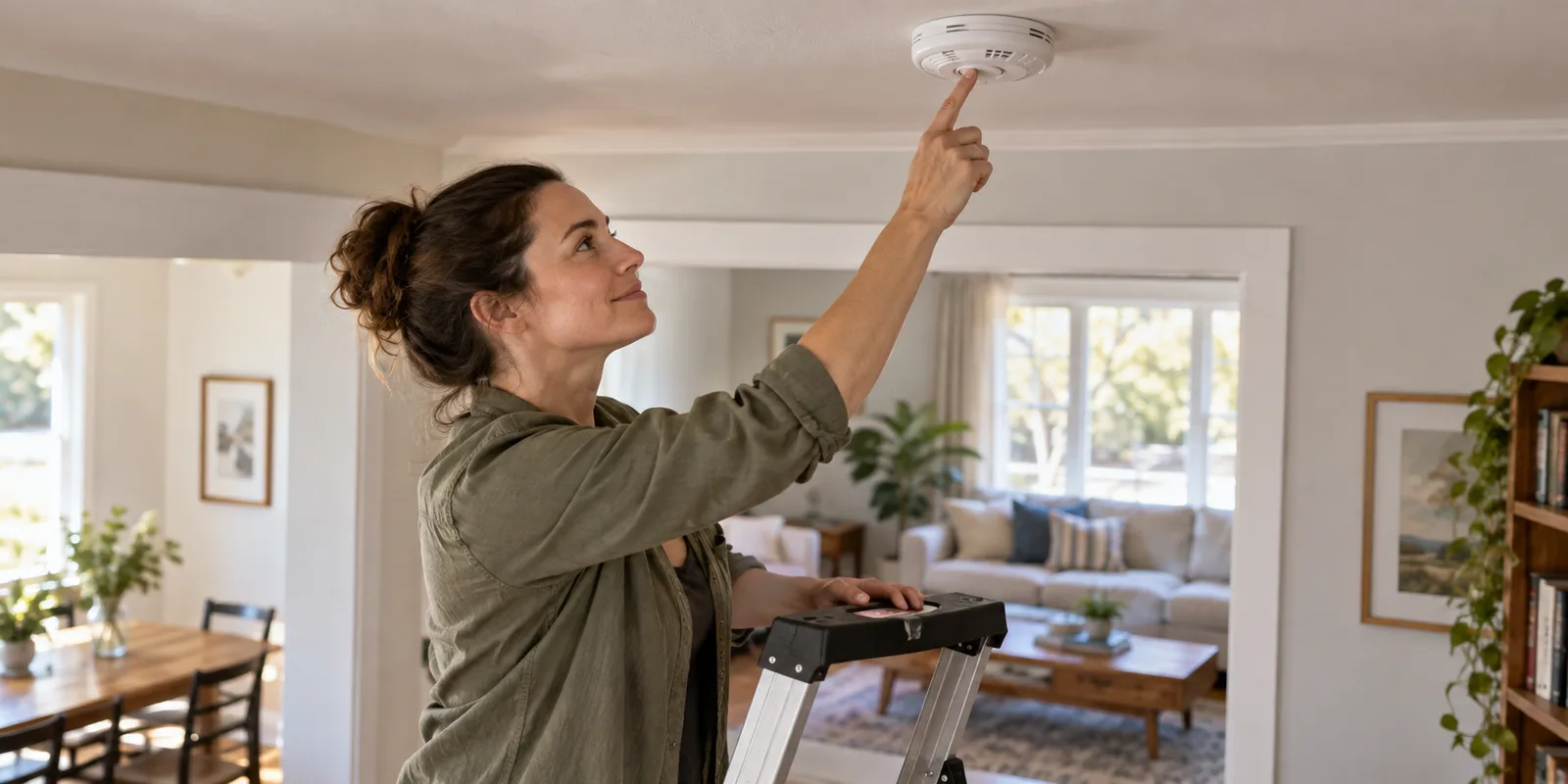
Get the model’s manual and a stable stepladder if needed. Warn everyone about the loud test. Never stand on a chair or use a flame to test an alarm.
Test each alarm
- Press and hold the test button for the duration in the manual. Listen for the specified sequence.
- Check that interconnected alarms also sound. If they do not, use the manufacturer’s troubleshooting instructions or arrange service.
- If an alarm fails its button test, check its power and any replaceable battery as directed, then retest. Replace a unit that still fails. Do not disconnect working alarms to silence them.
- Read the manufacture date and replacement instructions. Smoke alarms generally need replacement at ten years; a combination alarm may have additional requirements.
- Put testing on your calendar: at least monthly, or more often if your manual specifies it.
Check the result
Record each alarm’s location, successful test, and replacement date. A button test does not mean you can ignore end-of-life warnings. If the manual specifically permits an aerosol test, use only its approved product and procedure.
Check coverage too: inside bedrooms, outside sleeping areas, and on each level. Use the home safety checklist to track gaps.
Sources and scope
These references support the guidance above. Source review is not a hands-on test of your home or a certification of a product. Follow the instructions for your exact model and local requirements.
Related reads and checklists
Electrical Safety Checklist
Check cords, outlets, circuit protection, and normal panel controls, then record hazards that need an electrician.
ChecklistHome Safety Audit
Review alarm coverage, escape routes, electrical hazards, furniture anchors, and dryer exhaust with a clear follow-up record.
BlogCheck Fire Extinguisher Date
Check extinguisher condition, the model’s inspection and service requirements, and when replacement or professional service is needed.
BlogLabel Your Breaker Box
Map accessible branch circuits through normal breaker controls and record a clear directory without removing the panel cover.