By Dan Gold · Sources reviewed
Check Your Water Shut-Off
Locate your main water valve, check which systems depend on it, and verify a safe shutoff test without forcing a stuck valve.
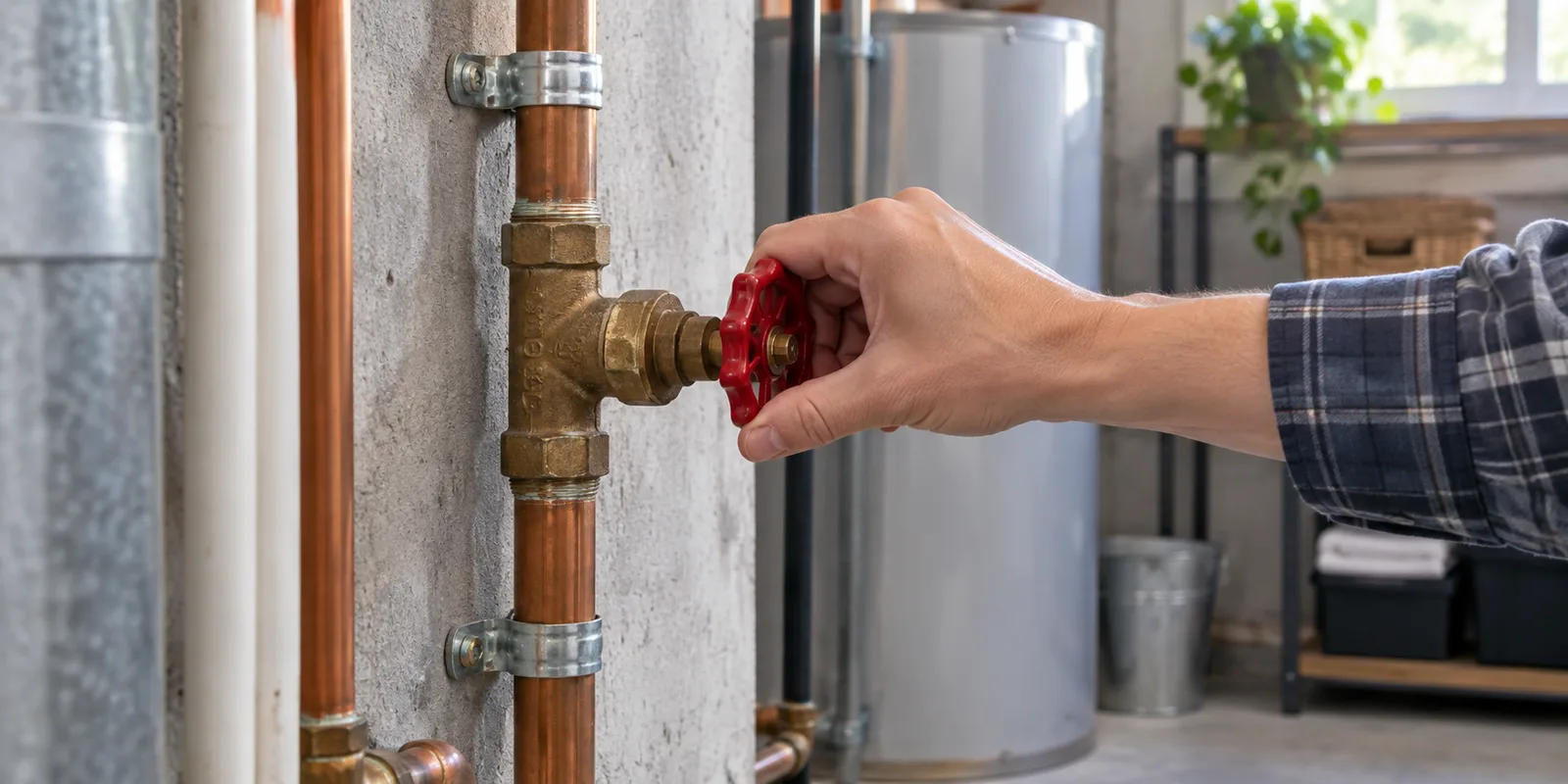
Find and label your home’s private main water shut-off before an emergency. Its location depends on the building; the utility’s curb valve may require the utility to operate it.
Locate it first
Check the inspection report and trace the incoming supply near a basement, crawlspace entrance, garage, or utility area. Ask the utility or plumber if you cannot identify it. Do not confuse it with a gas valve, fire-sprinkler supply, or irrigation shut-off.
Practice only with a serviceable valve
- Tell everyone before interrupting water. Check whether any equipment needs a water supply and follow its shutdown instructions.
- Inspect the valve for corrosion and leakage. A stiff, damaged, or leaking valve needs a plumber; never force it.
- For an identified quarter-turn ball valve, the handle typically sits across the pipe when closed. Other valve designs work differently. Close gently as directed for that valve.
- Open a cold-water faucet and allow pressure to drop. Confirm the flow stops, then close the faucet.
- Reopen the supply slowly and inspect the valve for leaks. Check faucets before ending the drill.
Make it usable in an emergency
Attach a clear tag and save a photo of the location in your home notes. Tell household members where it is. If flow does not stop or the valve starts leaking, arrange repair now. Do not wait for a burst pipe to discover that it fails.
Sources and scope
These references support the guidance above. Source review is not a hands-on test of your home or a certification of a product. Follow the instructions for your exact model and local requirements.
Related reads and checklists
Silencing a Running Toilet
How to check the chain and flapper before calling a plumber.
BlogThe Food Coloring Toilet Test
Use a ten-minute dye test to find a toilet tank leak, interpret the result, and retest after the correct repair.
ChecklistWhole Home Plumbing Audit
Catch leaks before they become floods. A systematic check of taps, traps, and tanks to ensure water stays in the pipes.
ChecklistHome Safety Audit
Review alarm coverage, escape routes, electrical hazards, furniture anchors, and dryer exhaust with a clear follow-up record.